
Benchling Biologics
16
0→1
Overview

Designing the next-generation antibody platform
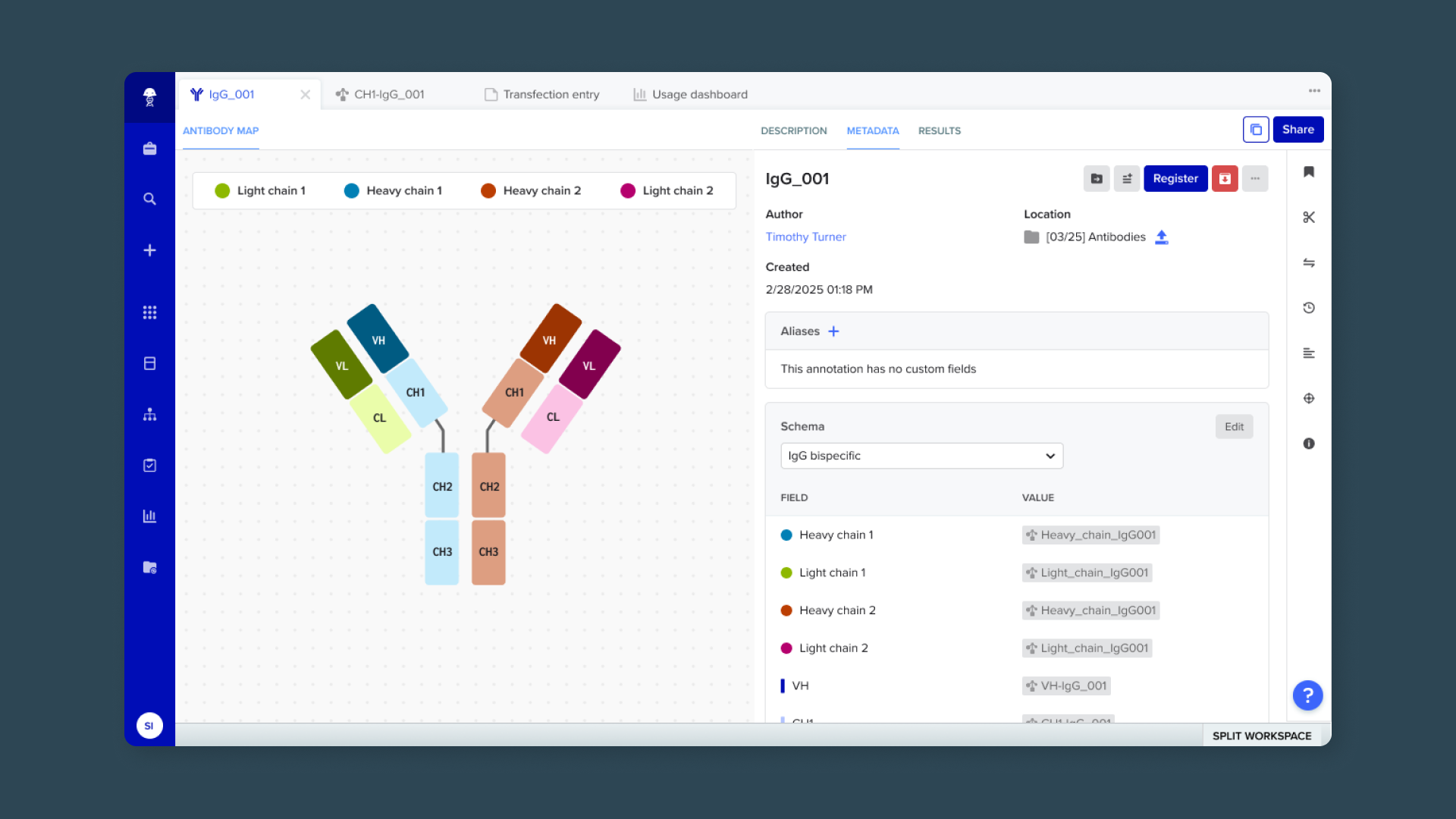
I led the end-to-end design of a unified system for creating, modeling, and visualizing antibodies across diverse formats, serving as the sole designer driving data ingestion, modeling, and visualization workflows across three scrum teams. The work consolidated several disconnected product efforts into one coherent experience and contributed directly to 16 closed customer deals witihin the first 3 months of release.
Antibody discovery is one of the fastest-growing areas in biologics R&D, and one of the hardest to model. Each antibody is a nested structure of chains, domains, DNA sequences, and plasmids that scientists must register, link, and trace to understand a molecule's lineage and performance. Yet most data models, both in Benchling and in legacy systems, capture antibody data too coarsely to support the next generation of AI capabilities, such as antibody variant prediction.
Benchling Biologics was released for general availability in May, 2026.
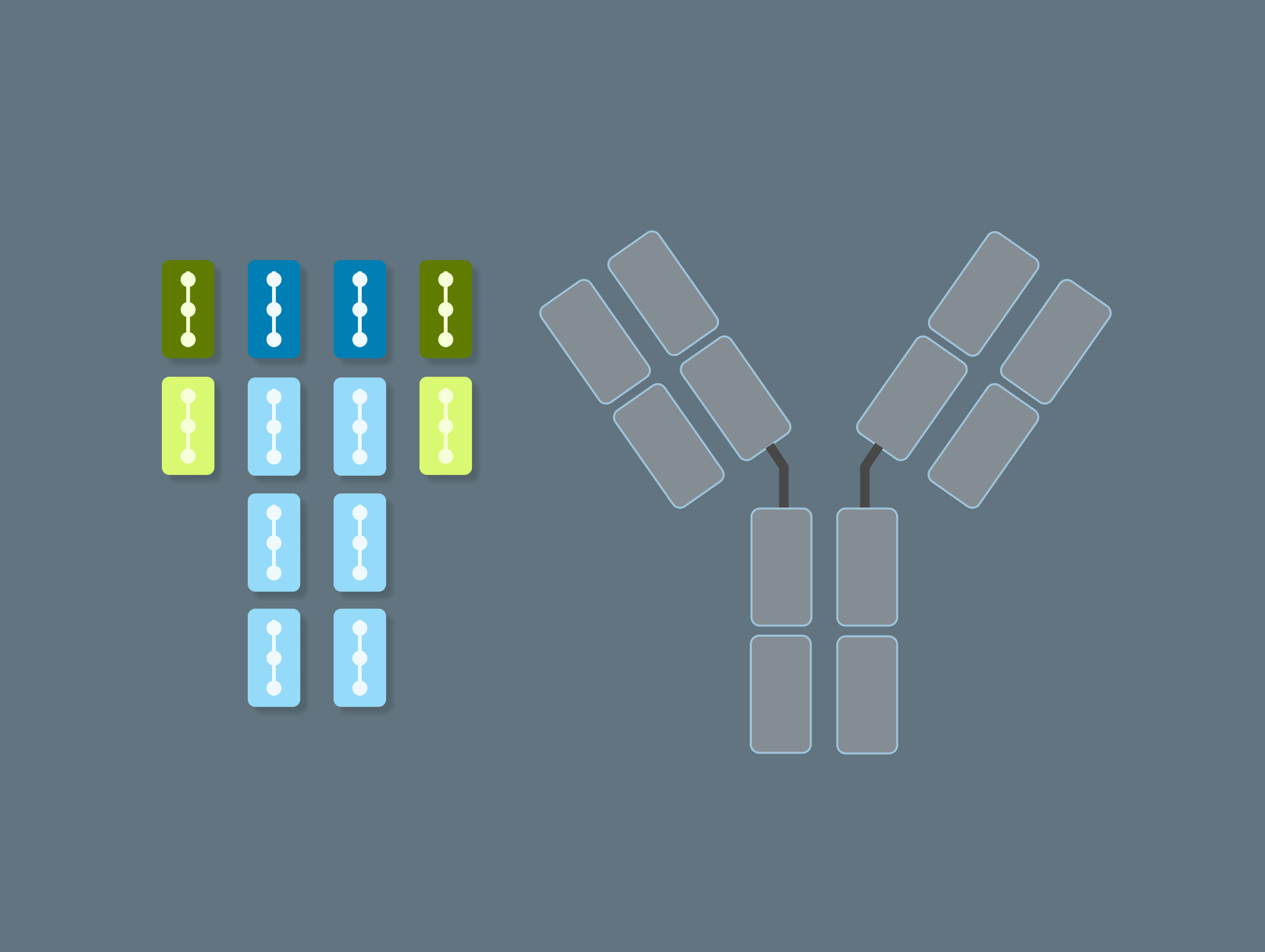
Model antibodies and their components
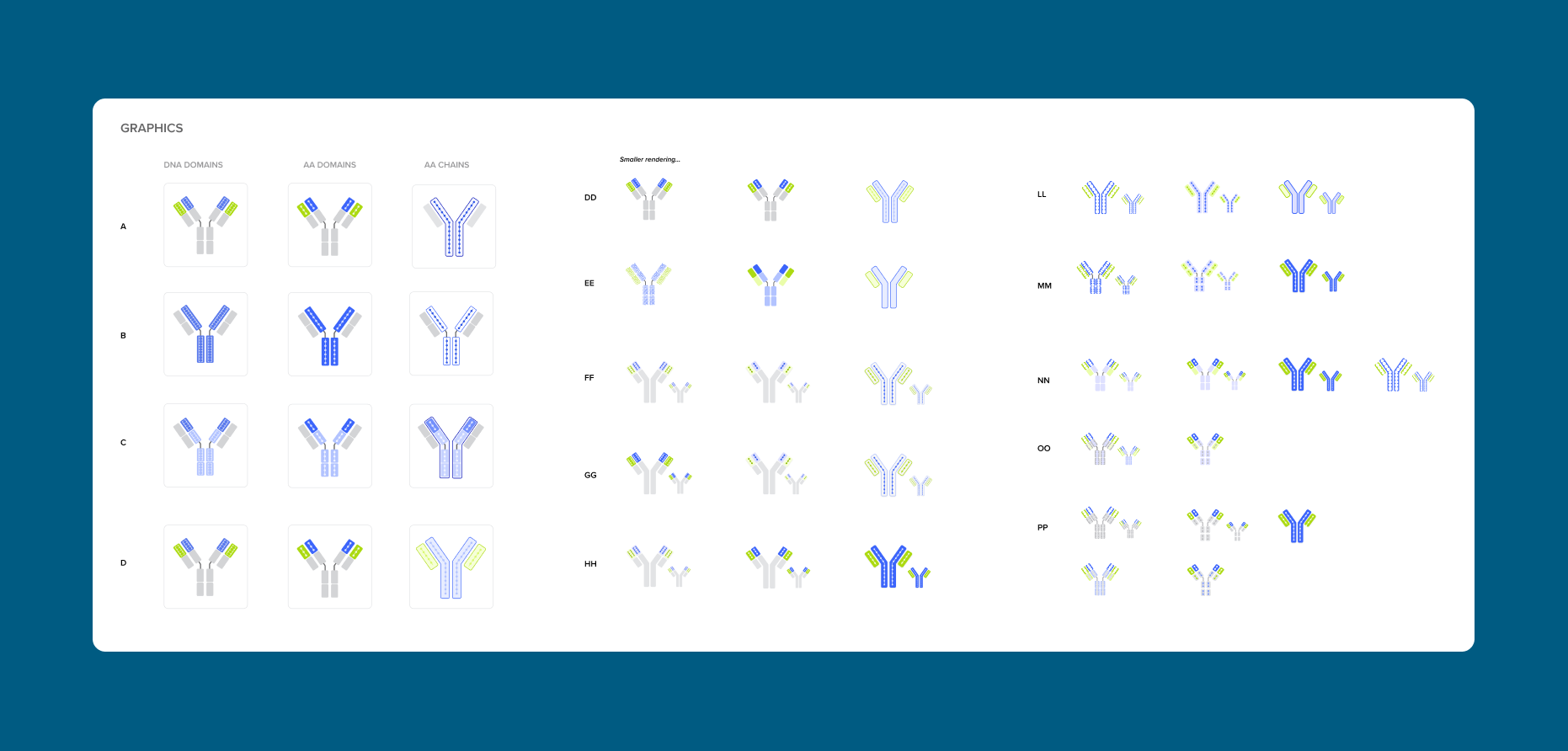
Design and represent complete antibody structures from chains and domains across both DNA and amino acid sequences, all linked within a unified data model
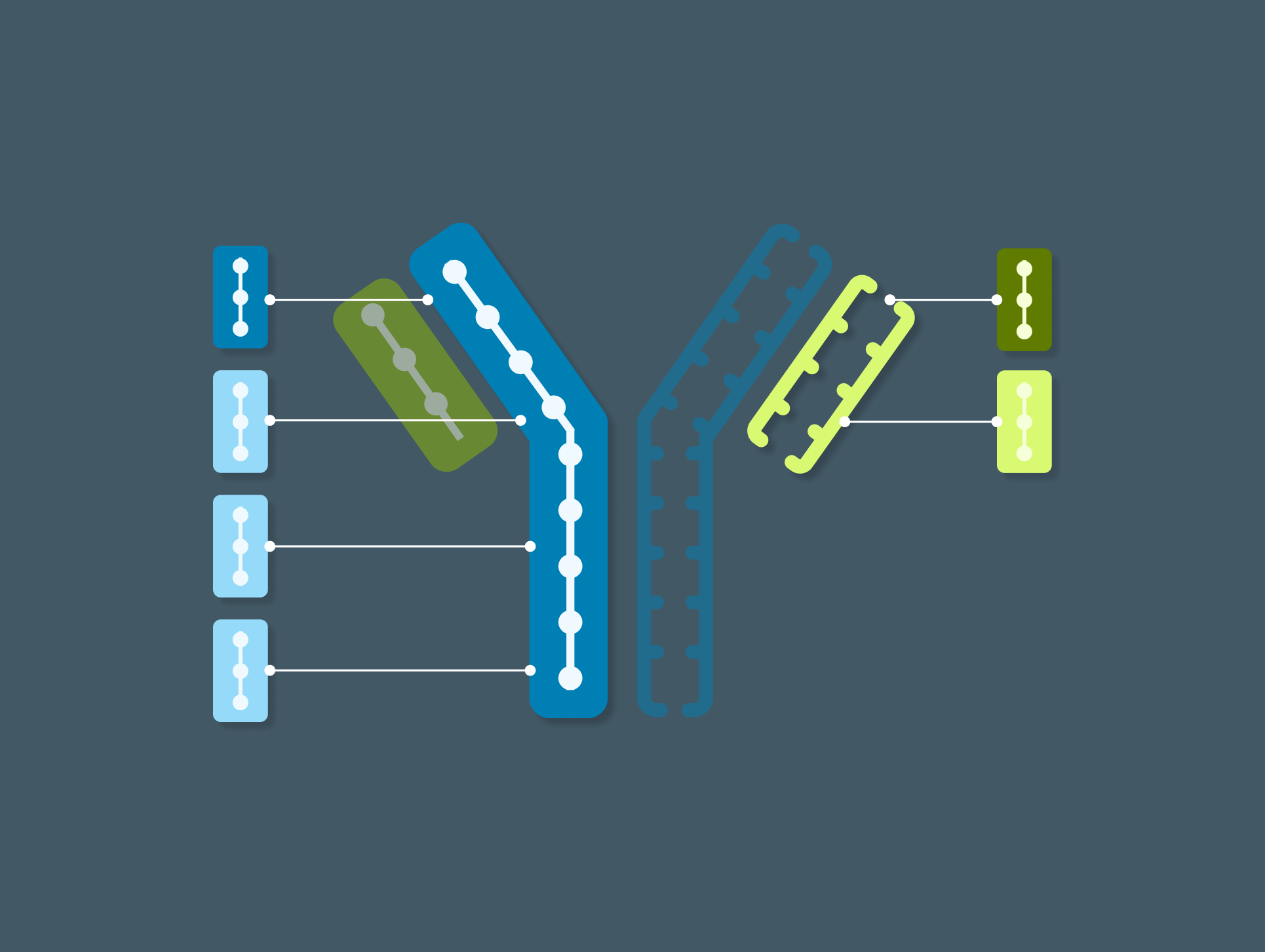
Maintain lineage and traceability
Link domains to chains and chains to antibodies to navigate the full molecular hierarchy of the antibody data model and maintain complete lineage and contextual traceability
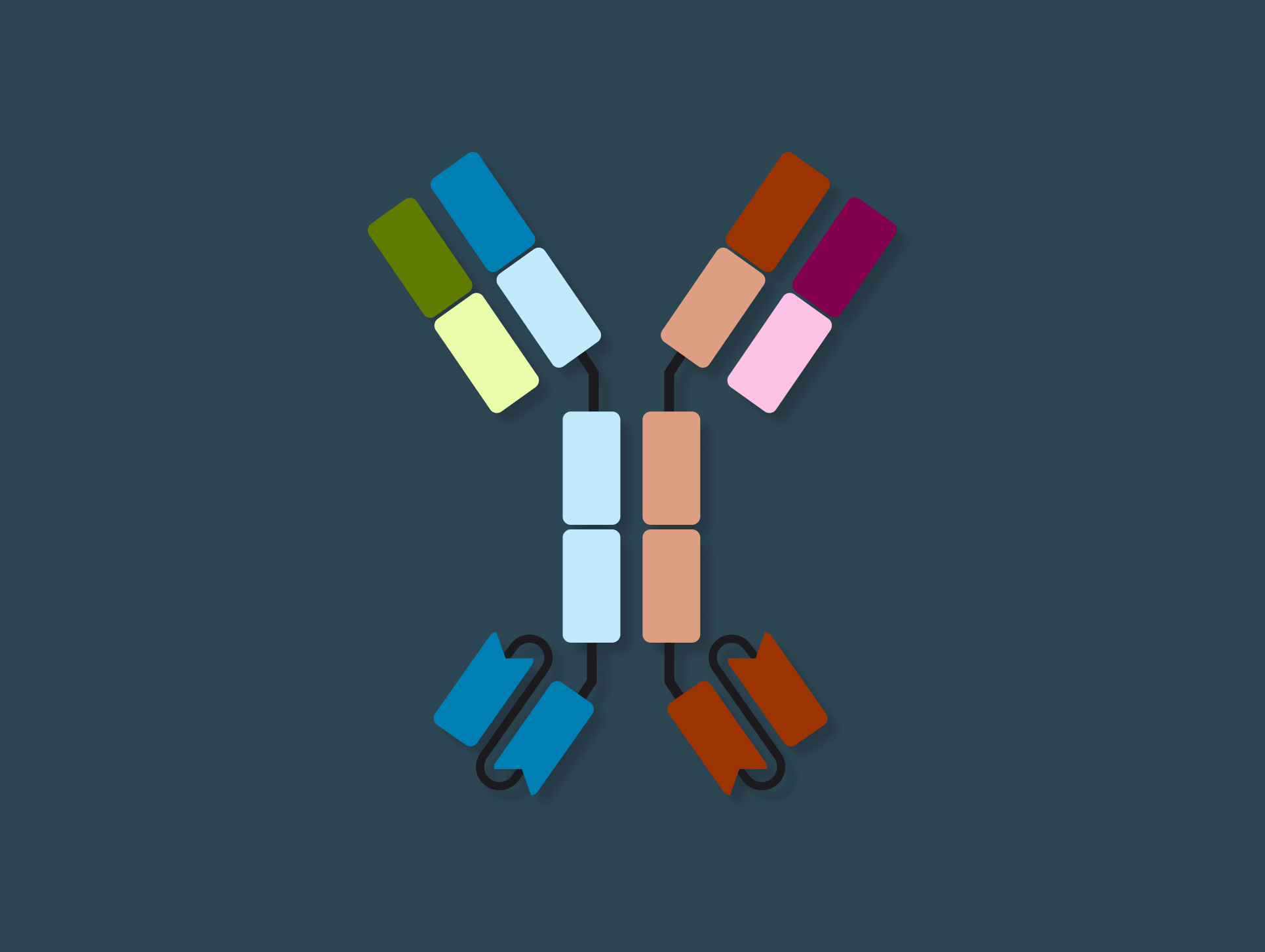
Support diverse antibody formats
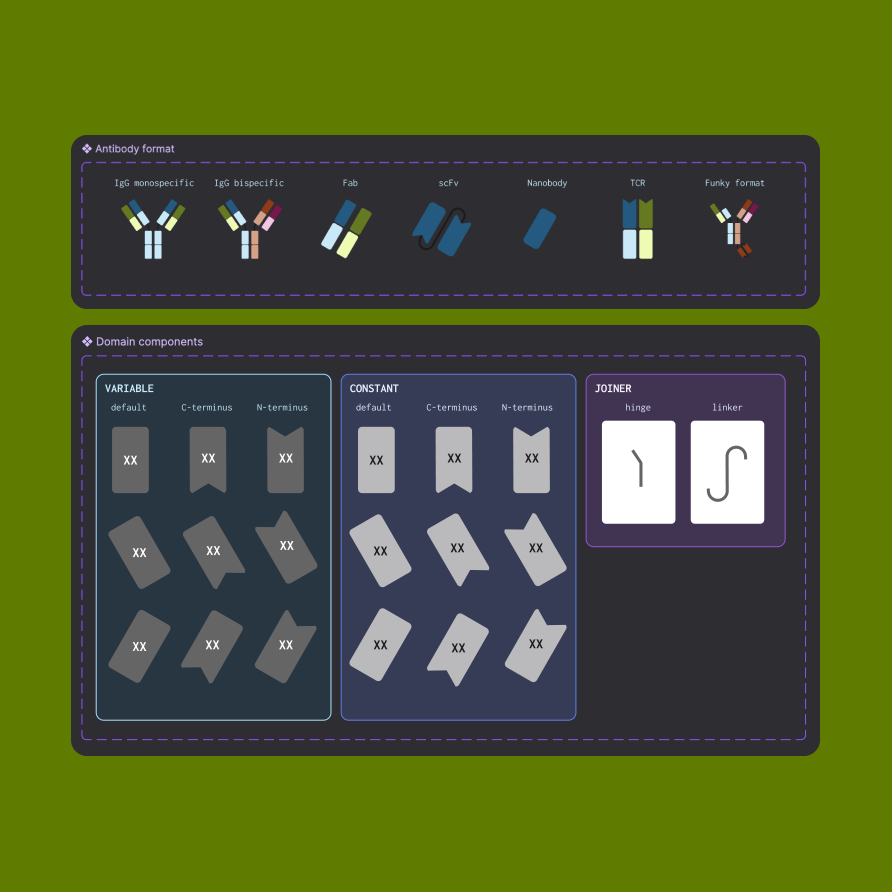
Model and support antibodies of diverse specificities, subtypes, and isotypes through flexible, customizable tools that adapt to any antibody format
Antibody 101
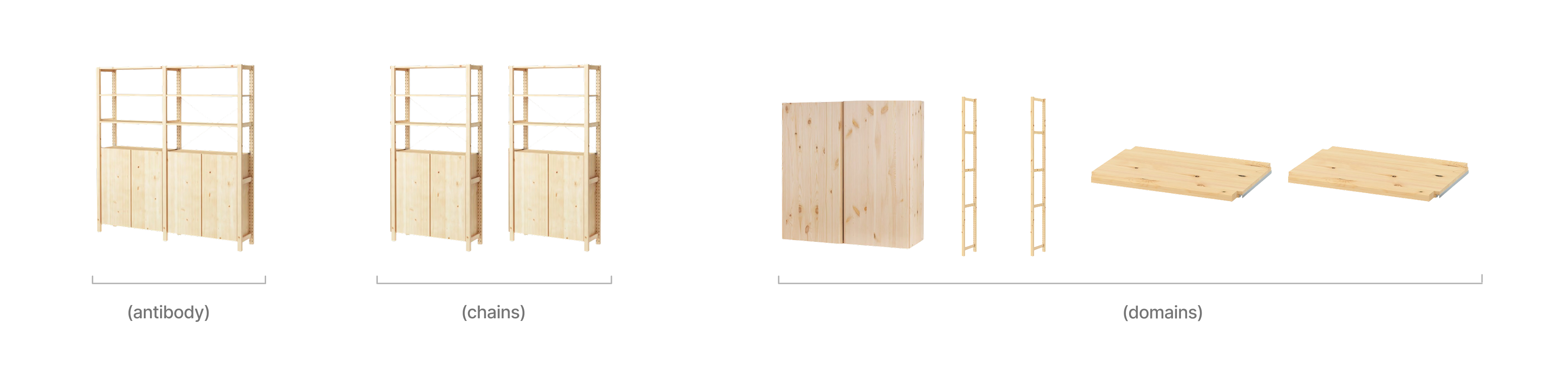
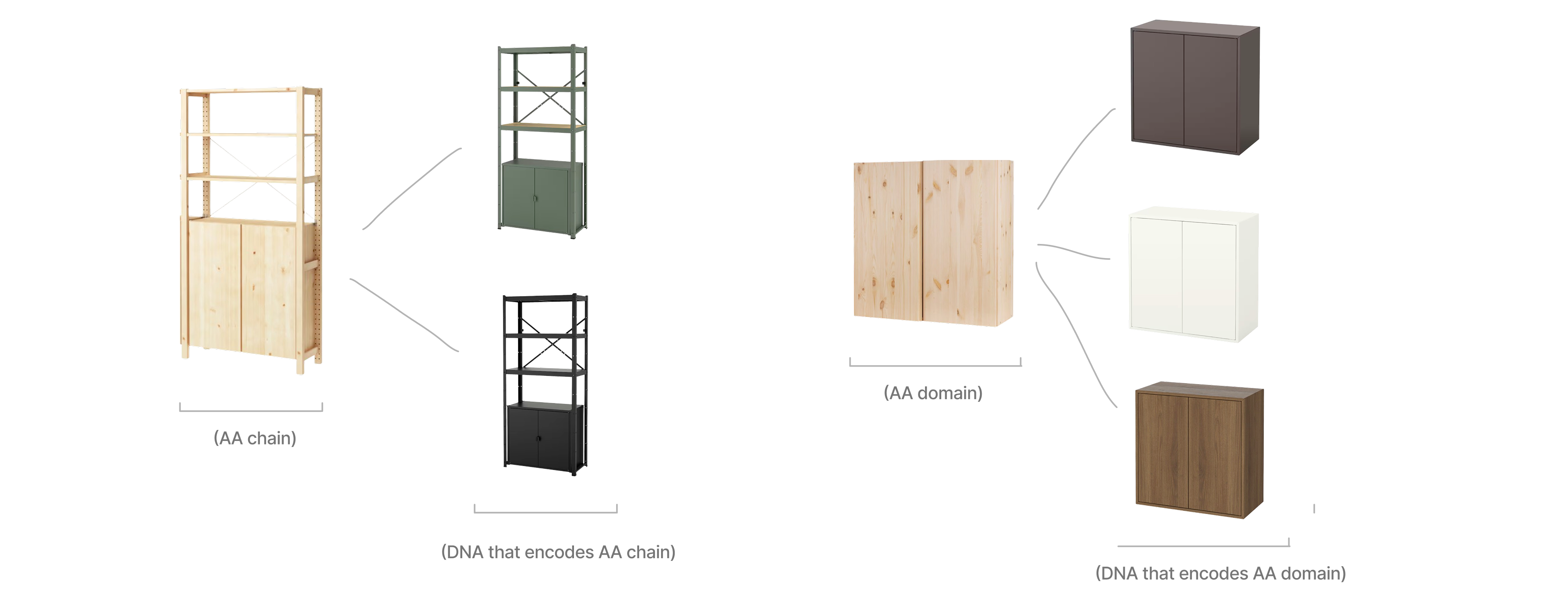
Consider an antibody like an Ikea shelving system...
An antibody is composed of larger amino acid (AA) sequences (chains). These chain sequences can be broken down further into smaller parts (domains).
Each AA sequence, for both chains and domains, has multiple DNA sequences that encode the same AA sequence
Approach
Diving deep into the end-to-end antibody discovery process

To design for antibody discovery, I first needed to deeply understand the entire journey and the tasks scientists undertake, both at the lab bench and at a laptop away from it.
I created an end-to-end user journey mapping the full arc of antibody work, from initial discovery through design, engineering, and production in the lab. Doing so helped identify the various user personas involved, the activities they performed at the bench, the tools they currently relied on, and the data they tracked as a molecule moved forward in the discovery pipeline.
Evaluating an antibody data model that would enable downstream AI capabilties
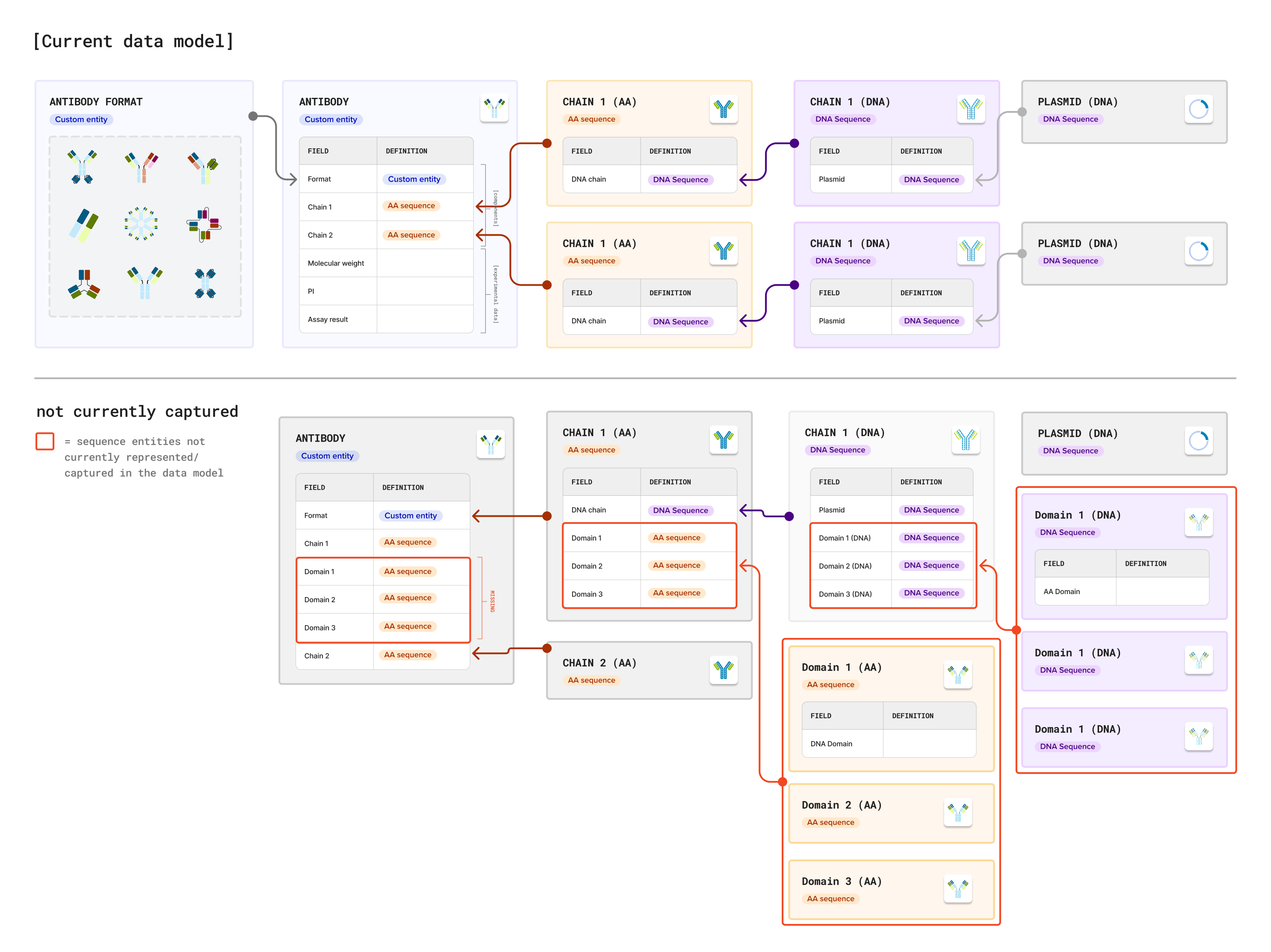
Enabling AI starts with a standardized, strucutred data model. I evaluated how antibodies were represented across Benchling and legacy systems, mapping each model against the level of detail that downstream capabilities like variant prediction require.
AI-assisted queries revealed that a majority of customer data models capture antbodies as flat or loosely linked records, losing the structural relationships between chains, domains, and sequences that an AI model would need to reason about a molecule.
User research
Understanding how legacy antibody solutions fall short
I led a UX research effort spanning more than 43 participants across a dozen organizations, from bench scientists and bioinformaticians to research leadership. From these conversations, common themes emerged that not only reflected the complexity of the space, but also the evolution within it that further necessitates a solution capable of supporting modern innovation in protein engineering.
22
12
43
Antibody registration workflows are manual and time-intensive
Lack of antibody characterization or validation results in lossy or error-prone data
Scientists are unable to define and model their novel antibody formats
Design execution
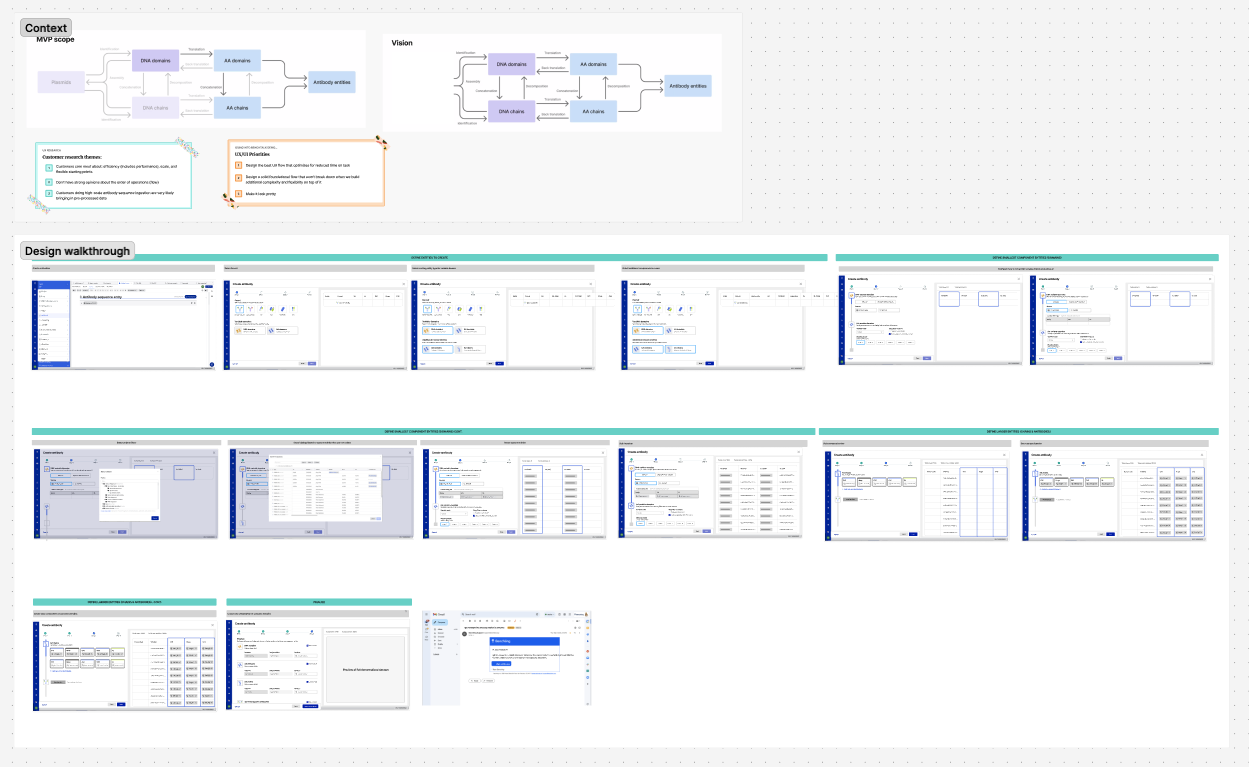
End-to-end design across three core workflows
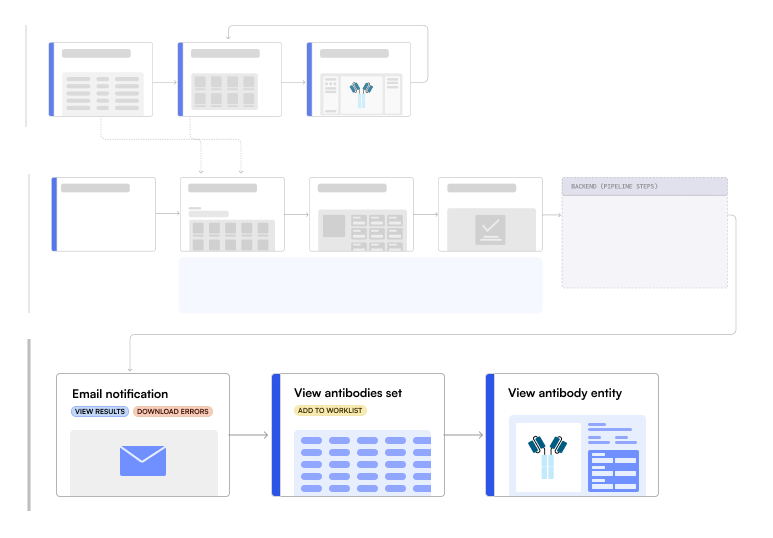
The antibody platform can be broken down into three discrete workflows: Model, Create, Visualize. Admins define schemas and formats to keep data structured and accurate. Scientists create antibodies from domain or chain components, brought into Benchling as raw DNA/AA sequences or existing entities, with each component characterized and validated automatically. Once built, antibodies can be explored from the full dataset down to a single sequence.
Each workflow optimizes for varied thematic design principes: integrity & accuracy in modeling, flexibility & scale in creating, traceability & interaction in visualizing.
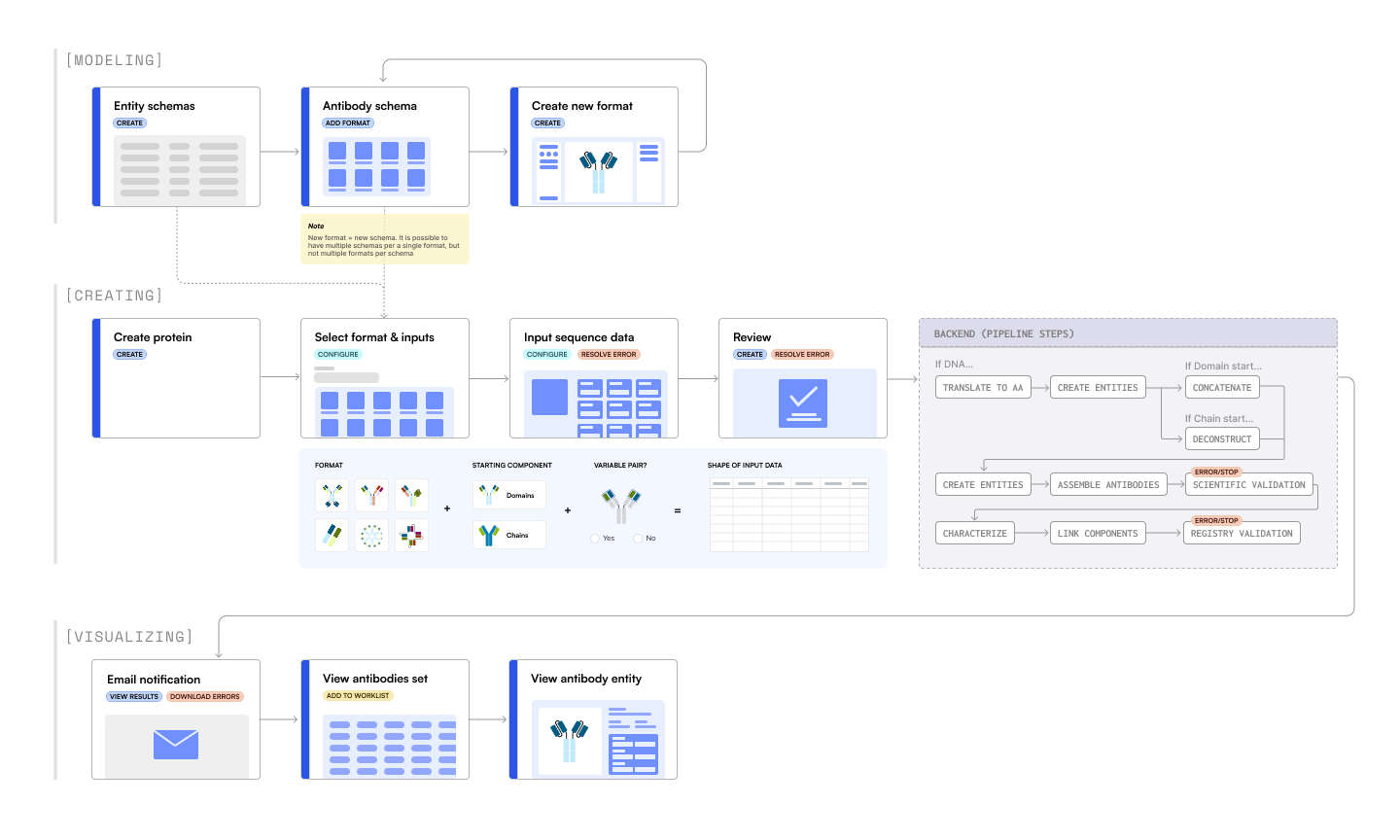
i. Modeling
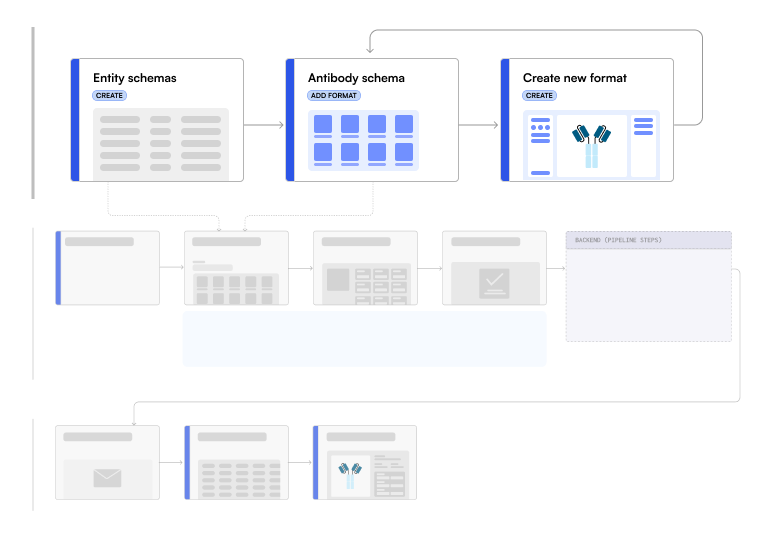
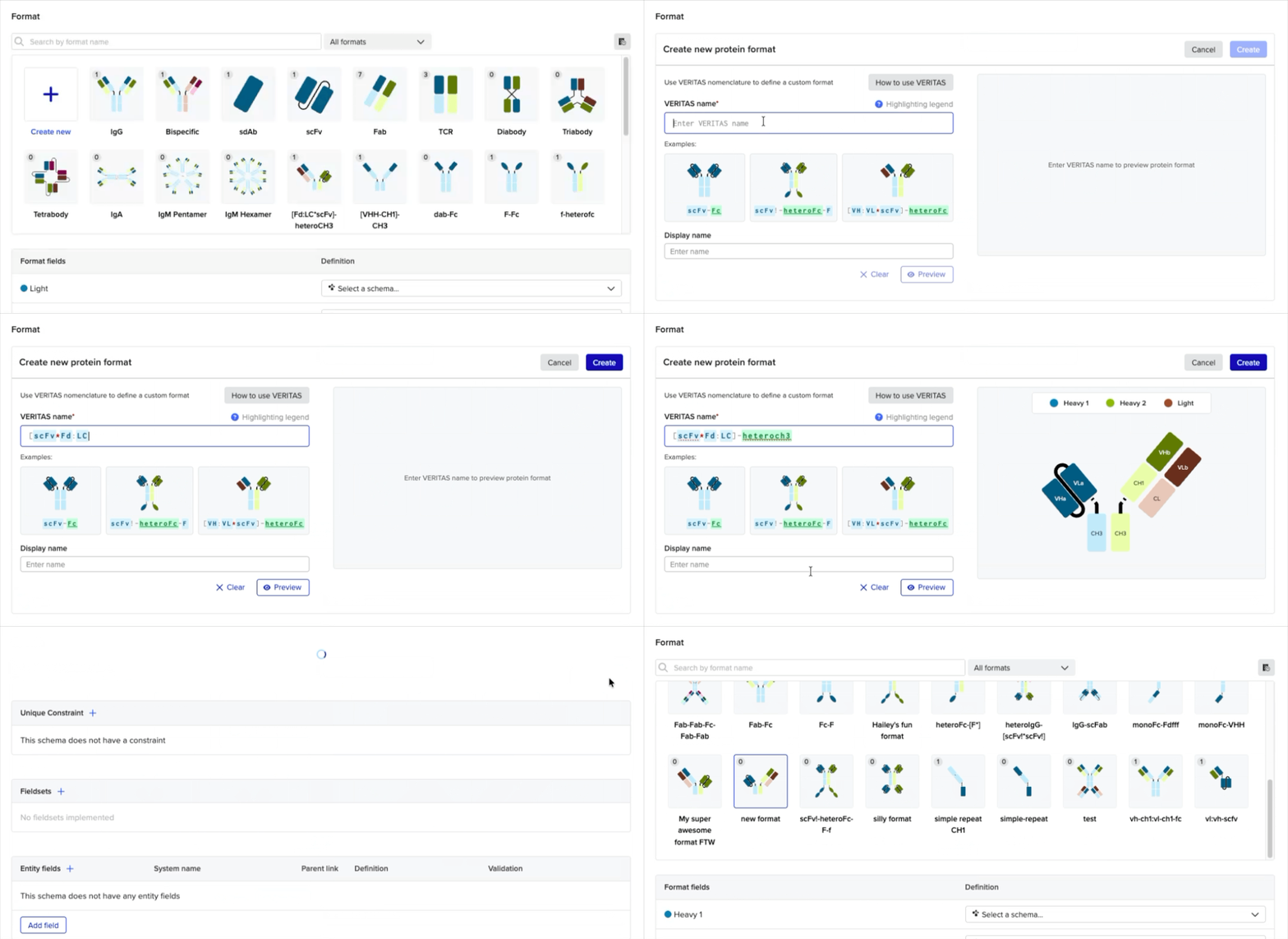
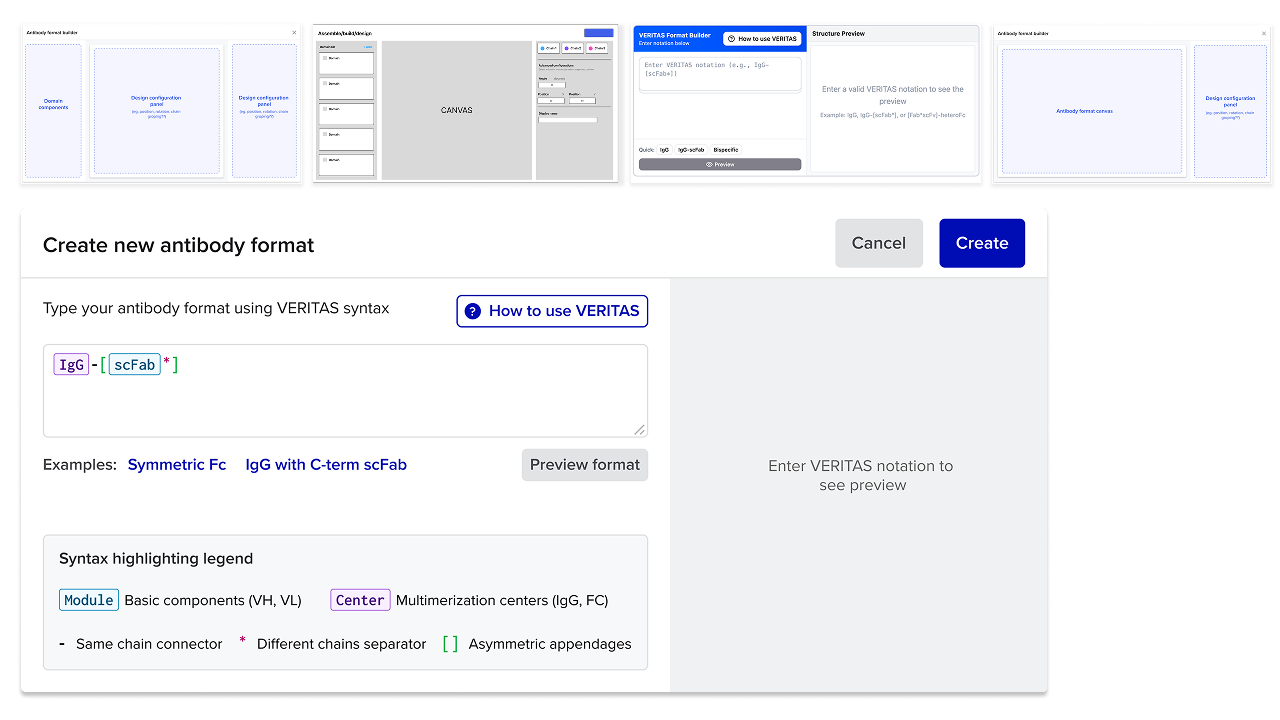
A no-code antibody format builder powered by VERITAS
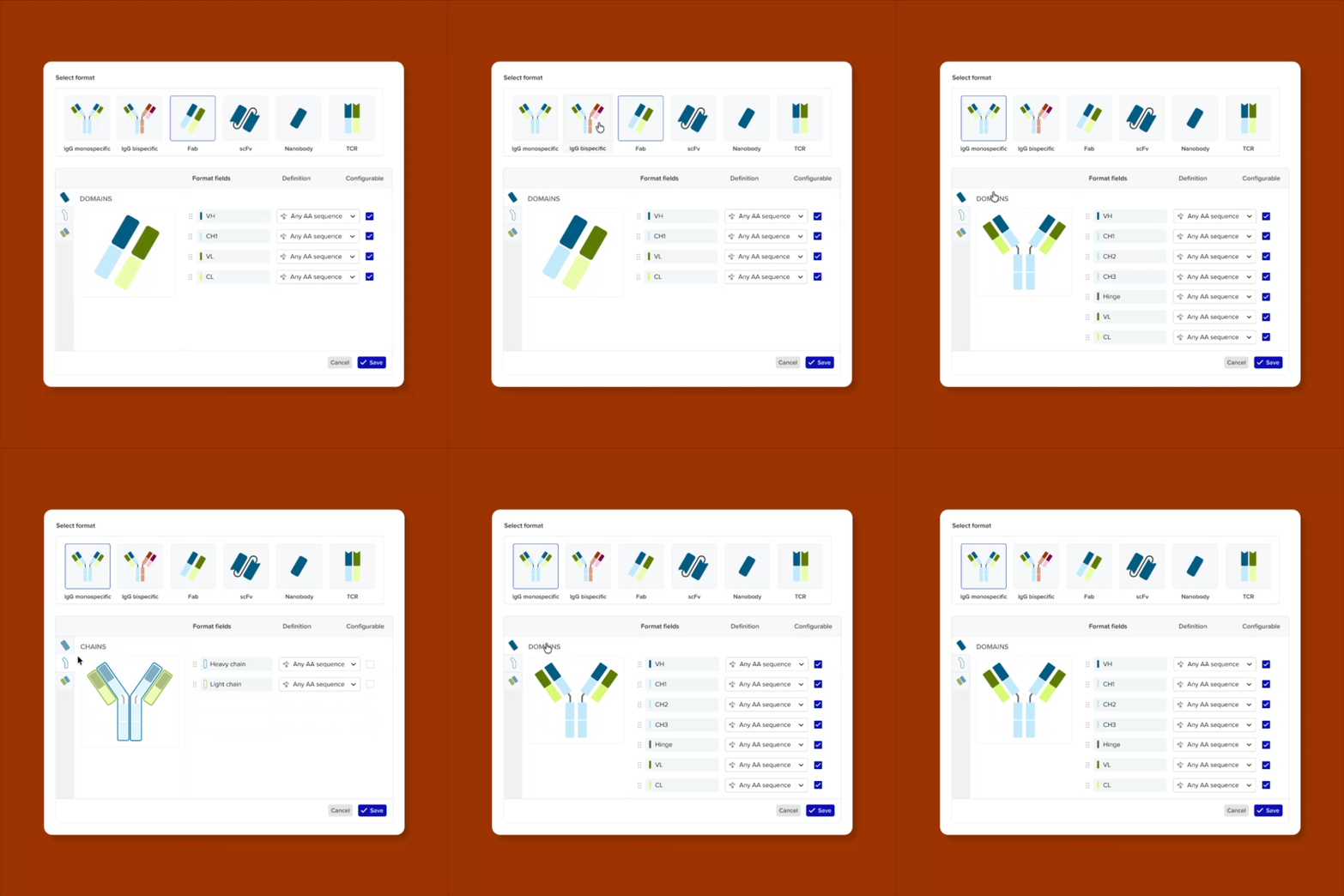
As antibody formats become increasingly complex, supporting new architectures required engineering effort and slowed scientific teams. I redesigned format configuration around VERITAS, transforming a technically complex process into an intuitive no-code experience for IT admins. The standardized, extensible framework allows scientists to define sophisticated antibody architectures consistently and accurately.
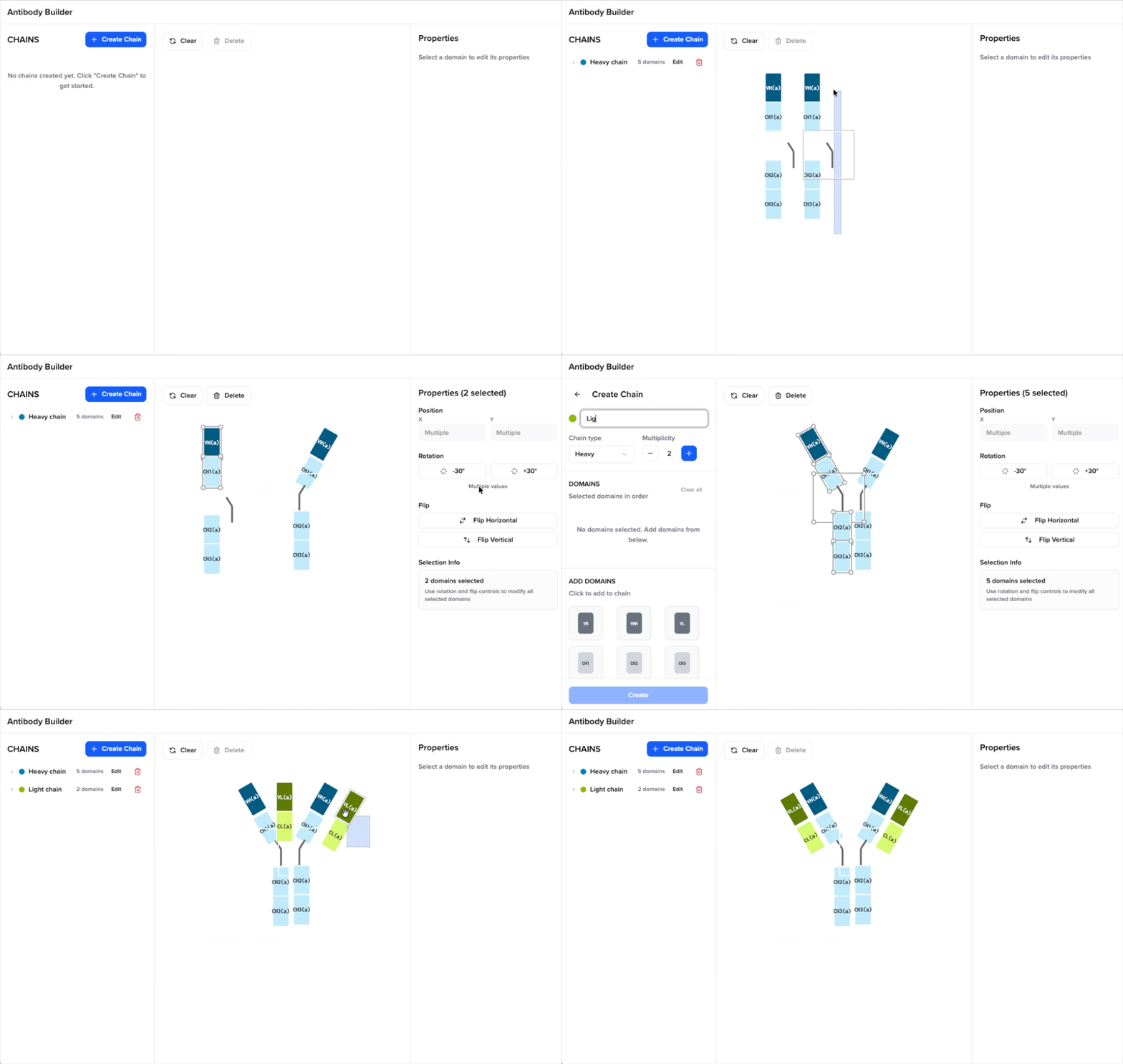
Drag-and-drop custom format builder
A drag-and-drop builder offered an intuitive way for users to visually assemble custom antibody formats without needing to learn a new system. However, while familiar, scientists expressed that the experience felt very manual and tedious, especially for complex formats. Try the prototype out for yourself!
ii. Creating
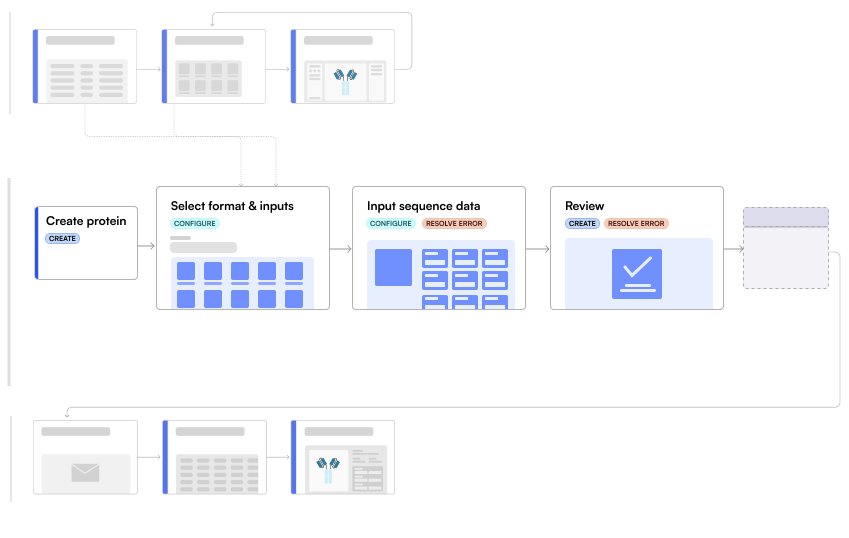
Streamlining high-throughput antibody creation and registration
Registering hundreds or thousands of antibodies required scientists to manually create, connect, and validate a complex network of protein entities. I reimagined protein registration as an end-to-end automation workflow rather than a series of manual data entry steps. Scientists can import up to 1,000 antibodies at once, starting from DNA or amino acid sequences, full chains or domains, while Benchling automatically builds the underlying entity graph, validates antibody architecture, and annotates sequence features at scale.
%20creation.gif)
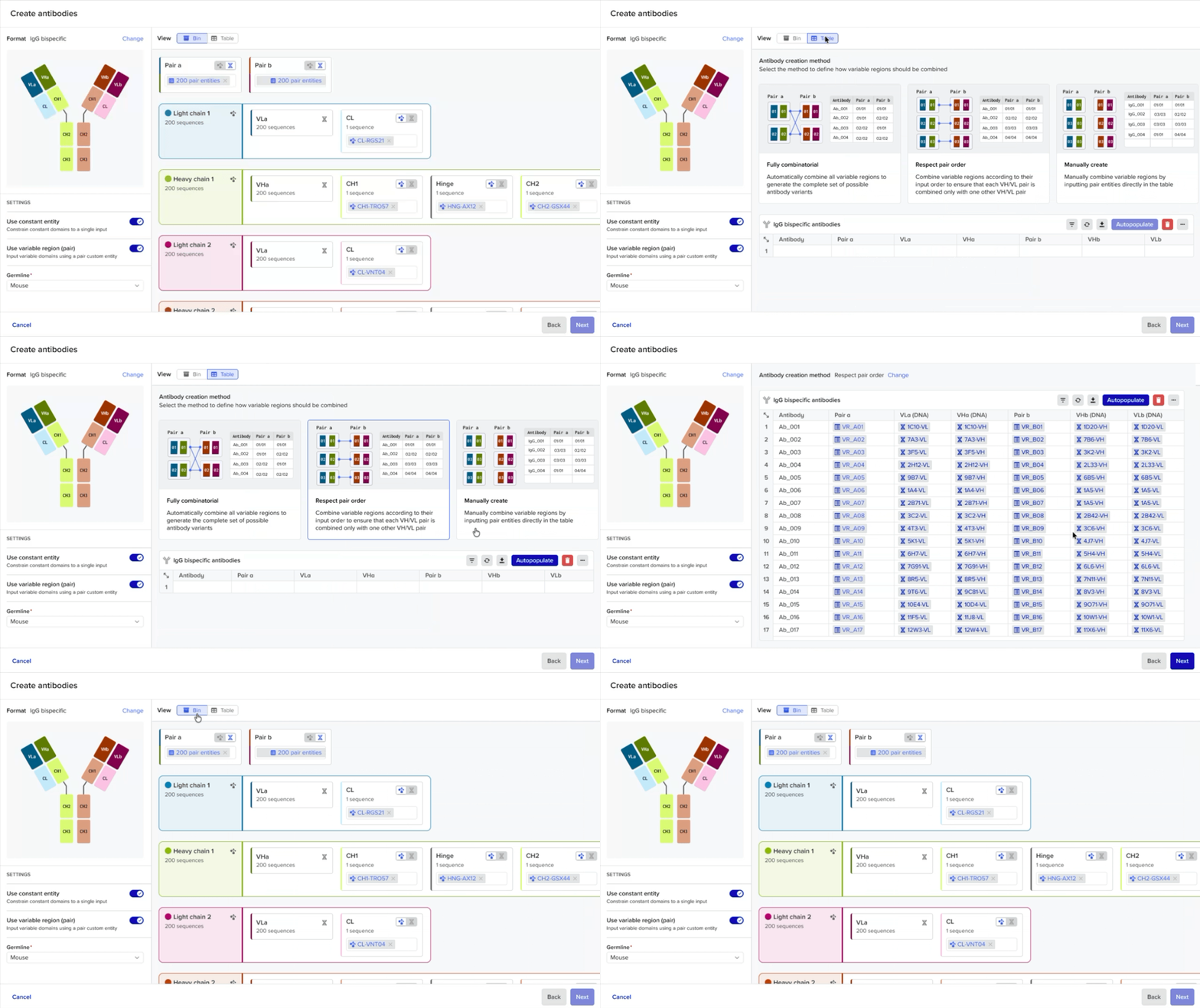
Structured bin-based component builder
When constructing multi-domain antibodies, scientists benefit from seeing domains grouped into visually segmented containers that reflect biological hierarchy, making complex formats easier to parse without excessive horizontal scrolling. Scientists also beneift from a structured table layout that enables rapid data entry, comparison across rows, and efficient scanning of standardized sequence attributes
iii. Visualizing
Bridging structural visualization and sequence analysis
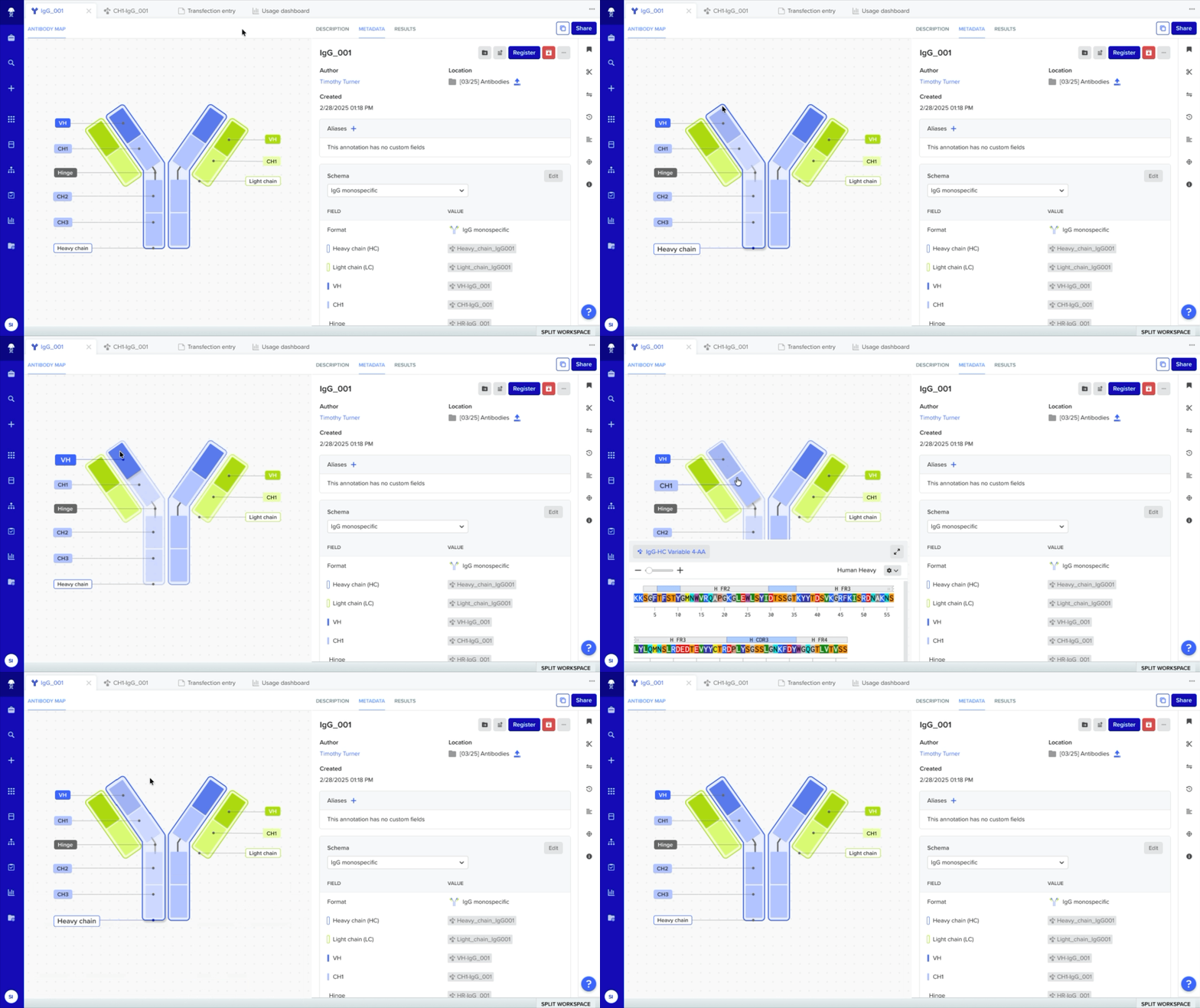
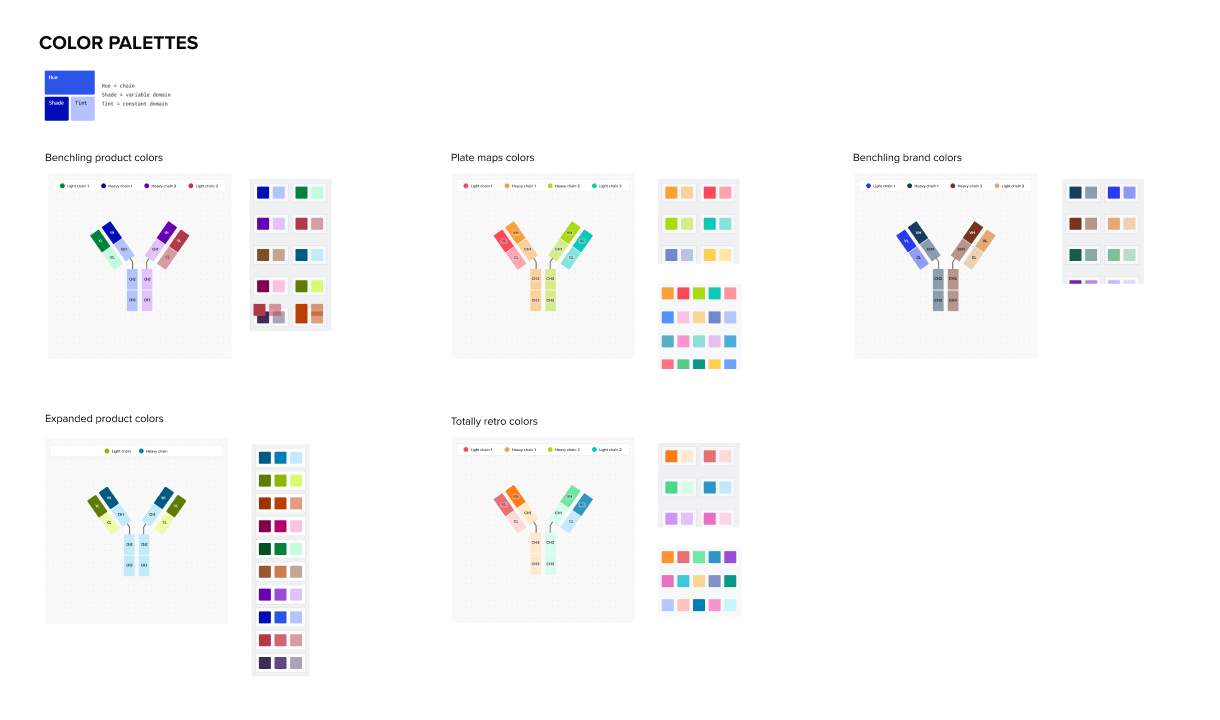
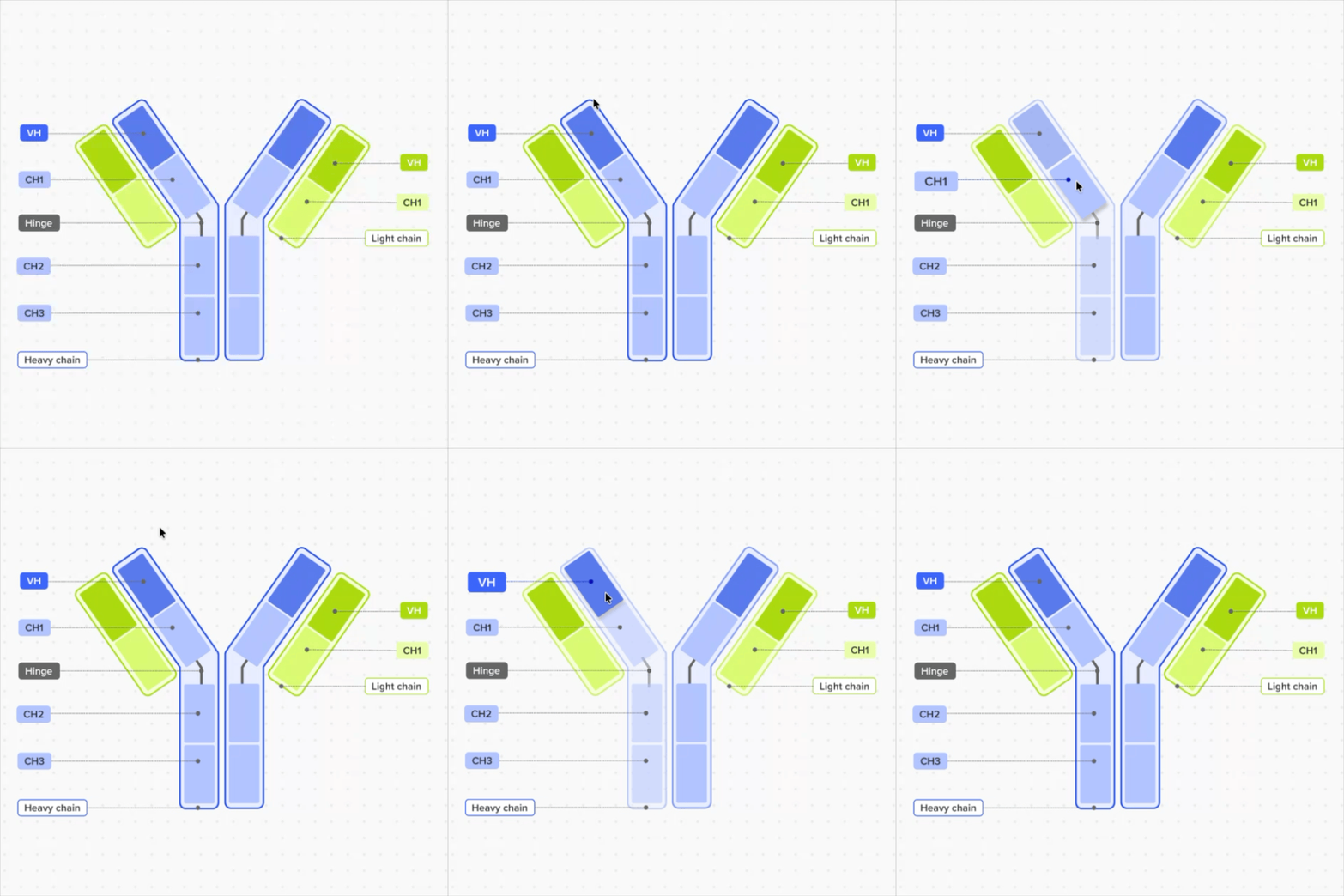
Protein registration generates a rich network of interconnected biological data, but inspecting those relationships was difficult. I transformed protein entities from static records into interactive visualizations by enabling scientists to explore an antibody's structure at multiple levels of detail.
%20interaction.gif)
Solution
An end-to-end experience for modeling, creating and visualizing novel antibodies
Biologics introduces an antibody-aware data model, custom formats, and intelligent registration tools that allow teams to rapidly capture, characterize, and visualize the full diversity of their proteins. Scientists will be able to register antibodies of any format, with ordered domains assembled into chains, and capture metadata at the domain level for richer analysis and AI-readiness.
This capability helps teams manage the complexity of modern biologics by creating a shared language across formats and enabling consistent, structured data capture that supports both discovery and model training.

Outcome
Benchling Biologics became generally available on May 11, 2026
Prior to launch, 12 customers participated in the beta program, including four enterprise customers actively migrating from competitive tools to the new solution. As of now, all of the data coming in is test data from a few larger accounts. Regardess, 14,587 antibodies have been created and registered since launch. Stay tuned for updates!
